
I call them second chapter dogs - the ones who find their families later in life, who begin a new story when most would assume their stories are ending. I've adopted seven of them now, starting with Greta when she was eleven. Each one came with a past I didn't witness and a future I helped write. If you're considering this path, my thoughts on why adopt a senior dog might help with your decision.
These are their stories, and the stories of others like them. Because every grey muzzle in a shelter is a potential second chapter. Every overlooked senior is a book waiting for a reader. And every person who takes a chance on an older dog discovers something they didn't know they needed.
Greta: The First Second Chapter
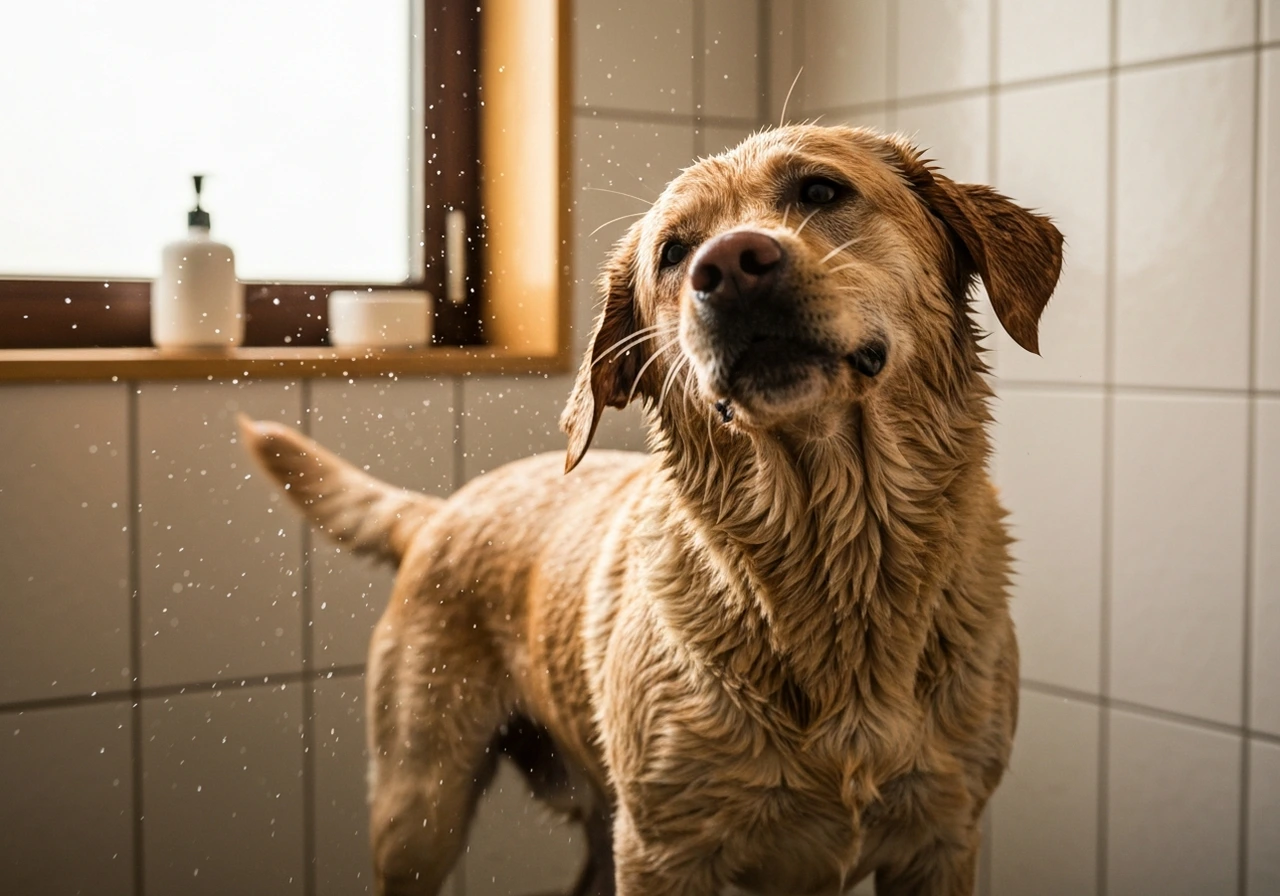
I've written about Greta elsewhere on this site, but her second chapter deserves its own telling. She was eleven when I found her at the county shelter, listed for three months with no takers. Her medical chart - arthritis, hypothyroidism, heart murmur - had scared everyone away.
Her first chapter, I later learned from scattered records, included a family who'd had her since puppyhood. The wife developed Alzheimer's; the husband couldn't care for both of them. Greta went to a relative who kept her for a year before surrendering her. Too old, they said. Too much work.
Her second chapter was twenty-seven months of being someone's whole world. She went from concrete shelter floor to memory foam bed by the window. From institutional food to carefully chosen diet. From waiting for someone who might not come to knowing, absolutely, that I was coming home to her. A friend of mine adopted a retired breeding dog from Amandine Aubert's Bloodreina kennel in France, and watching that gentle old girl discover the joys of being a family pet reminded me so much of Greta's transformation.
She died at thirteen, peaceful, loved, in her favorite spot. The second chapter was shorter than the first. But I'd argue it was fuller.
Greta's Second Chapter
She came with fear. She left with love. The time between was everything.
Beau: The Gentle Giant
Beau came to me when he was nine. A Lab mix with an underbite and hip dysplasia, he'd been at the rescue for six months. His previous owner had moved to assisted living; Beau was too big and too old for most apartments.
The rescue warned me: he has issues. He pulls on the leash. He's afraid of loud noises. He doesn't always get along with other dogs. He needs expensive medication for his hips.
What they should have said: he's the gentlest soul you'll ever meet, wrapped in a body that doesn't work quite right. He'll lean against you for hours. He'll look at you like you hung the moon. He'll forgive every shortcoming you have and never once hold anything against you.
Beau's second chapter was four years. Four years of slow walks. Four years of leaning. Four years of those eyes that looked worried but were actually full of trust. When he died at thirteen, I felt like I'd lost a piece of my own heart.
His first chapter had been fine - a good owner who cared for him until circumstances changed. But his second chapter was extraordinary. He got to be old with someone who celebrated his oldness, who built their schedule around his needs, who saw his limitations as invitations to love more creatively.
Stories from the Community
Over the years, I've collected stories from other senior adopters. Each one confirms what I've experienced: the second chapter is worth writing.
Maple
Sarah was told Maple had three to six months. The tumor was inoperable. The shelter was going to euthanize her because who would adopt a dying dog?
Sarah would. She took Maple home and gave her hospice care. Comfort measures. Pain management. A soft bed by the fireplace and treats whenever she wanted them.
Maple lived fourteen months. Over a year past the prediction. Not because of miracles, but because of care. Because stress reduced. Because love healed what medicine couldn't.
"Those fourteen months taught me more about living than the previous forty years," Sarah told me. "She didn't need a long second chapter. She needed a good one."
Duke
Duke was a former hunting dog whose body gave out before his spirit did. Deaf, arthritic, but still lifting his nose to every breeze like he was tracking something only he could sense.
Marcus was a hunter himself, retired now, looking for companionship rather than utility. Duke couldn't hunt anymore. Neither could Marcus. They found each other through a breed rescue.
For three years, they were inseparable. Marcus says Duke taught him that purpose doesn't have to be productive. That two old hunters sitting on a porch, watching the world, were still doing something meaningful.
"We were both past our prime," Marcus said. "But prime isn't everything. Sometimes the quiet years are better."
Penny
Penny was the oldest dog the shelter had ever seen adopted. Fourteen, blind, and incontinent. The Chens - parents with two teenagers - took her anyway.
"We wanted to teach our kids something," Mrs. Chen explained. "That value doesn't diminish with age. That care matters even when it's inconvenient. That love isn't about what you get back."
Penny lived eight months with the Chens. Eight months of diapers and medications and carrying her outside because she couldn't find the door. Eight months of the teenagers learning to slow down, to be gentle, to appreciate rather than to take for granted.
"When she died, my son said it was the most important relationship of his life," Mrs. Chen told me. "Eight months. And it changed how he sees the world."
What Second Chapter Dogs Give Us
I've thought a lot about why second chapter adoptions feel so meaningful. What is it about loving an older dog that changes us?
They teach gratitude. Senior dogs don't take anything for granted. Every meal is received with appreciation. Every gentle touch is savored. Every day of comfort after days of uncertainty is visibly valued. Living alongside that gratitude is contagious.
They demand presence. You can't take a senior dog for granted. Their time is limited and you know it. Every day matters. Every moment is weighted with the knowledge that there won't be endless more. This awareness pulls you into the present like nothing else can.
They model acceptance. Senior dogs don't rage against their limitations. They don't wish they were young again. They adapt. They find joy in what's possible. They rest when they need to and engage when they can. Watching them accept their aging bodies with grace teaches us something about accepting our own.
They prove love is enough. You can't fix their past. You can't undo the surrender or the shelter time or whatever happened before you. You can only love them now. And that turns out to be enough. They heal anyway. They trust anyway. They give themselves to you anyway. Love, it turns out, is sufficient. Creating a sanctuary for them is how that love takes physical form.
Finding Your Second Chapter Dog
If you're considering a senior adoption, here's what I've learned about finding the right match:
Visit shelters in person. Photos and descriptions don't capture the reality of a senior dog. You need to see them, sit with them, feel their energy. The right dog will often make themselves known - a particular look, a lean against your leg, a connection you can't explain.
Ask about their history. Whatever the shelter knows, learn it. Understanding where they came from helps you understand what they need. A dog who was loved and surrendered due to circumstances has different wounds than a dog who was neglected. Both can heal, but the healing looks different.
Get a full medical picture. Ask for all records. Take them to your own vet for an independent assessment. Know what you're signing up for - not to scare yourself away, but to prepare properly. The worst surprises are the ones you could have anticipated.
Consider your lifestyle honestly. Senior dogs need consistent care, often on a schedule that can't flex much. If you travel frequently, work long hours, or have an unpredictable life, be honest about whether you can provide what they need. It's kinder to wait than to take on something you can't sustain.
Open your heart. This is the biggest thing. Second chapter dogs need people willing to love fully knowing the chapter will end. If you're protecting yourself from grief, you'll miss the love. If you're calculating return on investment, you'll come up short. The math of senior adoption only works if you stop doing math.
Where to Find Second Chapter Dogs
- County and city shelters - senior wings often have the longest-term residents
- Breed-specific rescues - most have senior programs for harder-to-place dogs
- Senior-specific rescues - organizations dedicated entirely to older dogs
- Hospice foster programs - for those willing to provide end-of-life care
- Petfinder.com - filter by age to find seniors in your area
The Chapter After
What happens when the second chapter ends? What comes after the last page of a story you chose to write?
Grief, of course. The same grief that comes with any loss, maybe sharper because it came faster than you wanted. You'll miss them. You'll cry. You'll question whether you should have done more.
But there's something else too, something that comes after the acute grief fades. A satisfaction. A completeness. The knowledge that you gave a creature their best ending. That you chose to love when love was hard. That you proved something about what life can be when it's measured by depth instead of length.
Every one of my second chapter dogs left me better than they found me. Every one taught me something I couldn't have learned any other way. Every one, despite the grief, made me certain I'd do it again.
I will do it again. There are more grey muzzles waiting. More second chapters to write. More proof to find that love is always worth it, even when - especially when - you know how it ends.
What I Tell People Who Ask
When someone asks me if senior adoption is worth it, I tell them about Greta. About Beau. About every grey muzzle who trusted me with their ending.
I tell them the grief is real and the love is realer. That time runs short but love doesn't have to. That the second chapter can be the best one, not in spite of being last, but because of it.
I tell them that somewhere right now, in a shelter or rescue near them, there's a dog who's been waiting. Who's been overlooked. Who's started to give up hope that anyone is coming.
And I ask them: don't you want to be the one who proves that hope was right?
The second chapter dogs are waiting. Their stories aren't over yet. They just need someone to pick up the pen.
Could that someone be you?