
The first time Greta had an accident in the house, she looked at me with such shame. She knew she wasn't supposed to. Eleven years of house training, and suddenly her body had betrayed her. She stood next to the puddle, head lowered, waiting for my reaction.
I cleaned it up without comment. No scolding, no sighs, no change in my voice. When I was done, I sat beside her on the floor and told her she was a good girl. Because she was. Her bladder's failure wasn't a character flaw. It was just age, arriving as age does, without permission.
That moment taught me something I've carried through every senior dog since: dignity matters. When bodies start to fail, when the things they've always controlled become uncontrollable, our response shapes their experience. We can add shame to their struggles, or we can help them feel like themselves despite them. This is central to comfort care for aging dogs - the physical and emotional go hand in hand.
This is what I've learned about preserving dignity in old age.
The Body Changes They Can't Control
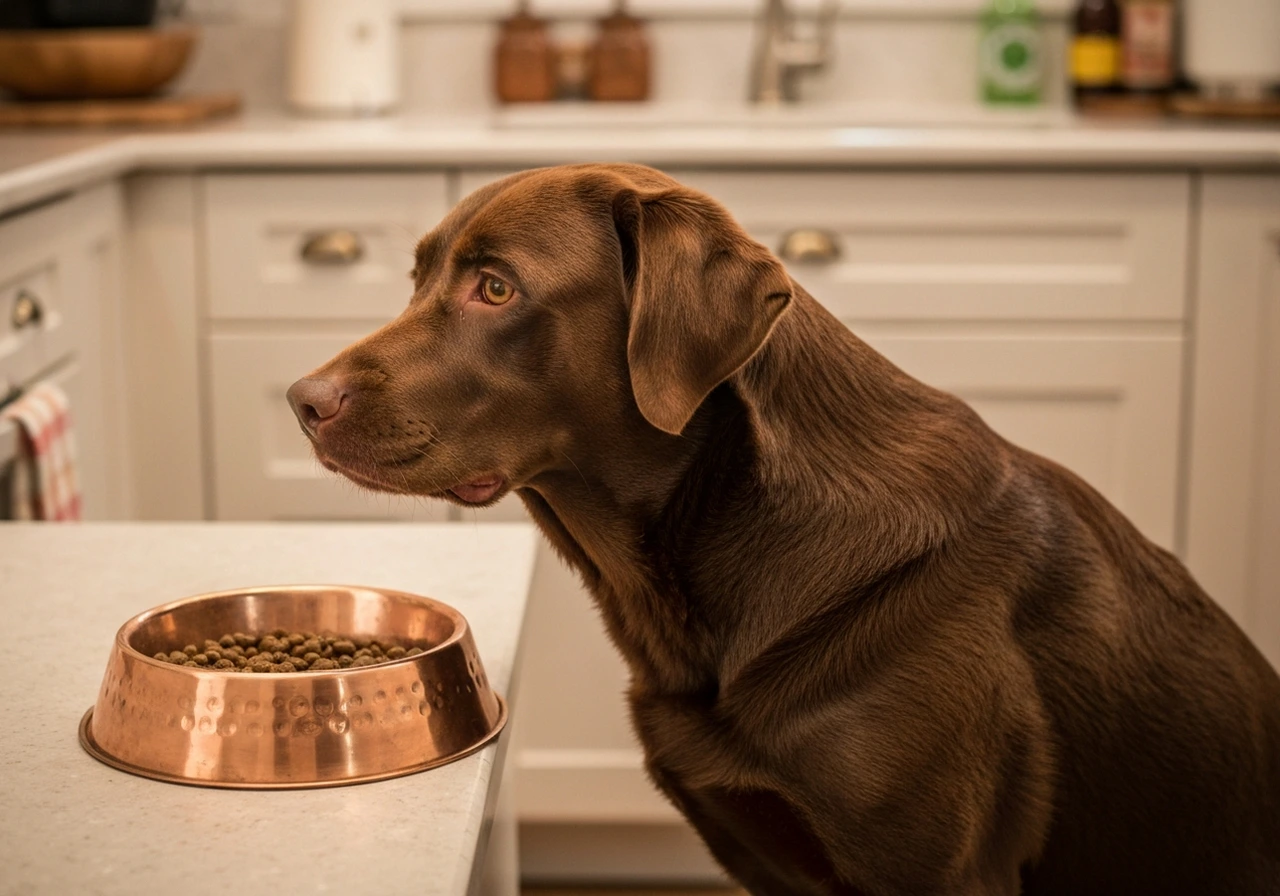
As dogs age, things happen that weren't happening before. Some are visible - the grey muzzle, the cloudy eyes, the slowed gait. Some are hidden until they manifest as problems. Let me name them clearly, because dignity requires honesty about what we're dealing with:
Incontinence. Loss of bladder control. Sometimes loss of bowel control too. This may happen occasionally at first, then more frequently. It often happens during sleep, when relaxed bodies can't hold what they once held easily.
Mobility loss. Difficulty rising. Trouble with stairs. Legs that buckle unexpectedly. The inability to get to places they've always gone - the couch, the bed, the door that leads outside.
Confusion. Standing in the middle of a room, apparently lost. Forgetting house training. Failing to recognize familiar places or people. The cognitive decline that comes with canine dementia.
Sensory loss. Hearing that fades. Vision that clouds. The world becoming less accessible through the senses that once made it vivid.
Weakness. Muscles that can't do what they used to. The inability to hold certain positions. The trembling that comes with effort that used to be effortless.
None of these are choices. None of these are failures of character. They're simply what happens when bodies age. Our job isn't to prevent them - we can't - but to respond to them in ways that preserve our dogs' sense of self.
Beau's Struggle
Beau's back legs gave out before the rest of him. His hips, already bad when I adopted him, deteriorated until he couldn't stand without help. He'd try to rise, fail, try again, fail again - and the shame on his face was heartbreaking.
I got him a harness with a handle. When he needed to stand, I lifted his back end while his front legs did their work. When he walked, I walked beside him, hand on the harness, ready to catch him if he buckled.
He wasn't embarrassed by the harness. He was grateful. What shamed him was failing; what restored his dignity was succeeding, even with help. The distinction mattered. He wanted to walk. I made it possible. That was all.
Responding to Accidents
Let me be specific about incontinence, because it's one of the most dignity-threatening aspects of aging.
When your senior dog has an accident, they often know. They've been house trained for years. The rules are in their memory even when their body won't follow them. They expect your disappointment because they've disappointed themselves.
What you do next shapes their experience of their own decline.
Don't react. No sighing. No expressions of frustration. No verbal response that could be interpreted as displeasure. Just calm cleanup.
Don't draw attention. Move them gently away from the spot if needed. Clean it up as matter-of-factly as you'd clean any mess. Make it unremarkable.
Offer reassurance. After cleanup, give them attention. Pets, a treat, the verbal affirmation that they're still good. Remind them - and yourself - that an accident doesn't change who they are to you.
Adapt the environment. Potty pads in areas where they rest. Waterproof covers on beds. More frequent trips outside. Make accidents easier to manage so each one is less of an event.
Consider diapers. Some people resist this, seeing it as undignified. But a dog who is dry and comfortable, who doesn't have to lie in their own mess, is more dignified than a dog who is constantly wet and ashamed. Diapers can be a kindness, not a humiliation.
Helping Without Hovering
There's a balance to strike as dogs age: they need more help, but they also need to feel capable. Too much assistance can be as damaging to dignity as too little.
Watch your dog. Learn what they can still do independently and what they can't. Help with the can'ts. Step back from the cans.
Greta could still walk to her water bowl, slowly but successfully. If I'd carried water to her every time, she'd have lost that journey - one of the few she could still make on her own. I let her make it. I watched from nearby, ready to help if she stumbled. But I didn't preemptively remove her agency.
Beau couldn't get into the car, but he could walk across the parking lot to it. I didn't carry him across the lot. I walked beside him, patient with his pace, letting him do what he could. Then I lifted him into the car for the part he couldn't.
This isn't about withholding help. It's about offering help that preserves as much capability as possible. Dogs want to be capable. They want to do things for themselves. When age takes some capabilities away, protect the ones that remain.
The Language of Respect
Words matter, even though dogs don't understand them. The way you talk about and to your aging dog shapes the energy you bring to their care.
I never called Greta's accidents "mistakes." I never called her condition "pathetic" or "sad." I never spoke about her decline in her presence with tones of tragedy.
Instead, I spoke to her with the same respect I'd always used. "Good girl." "What a beautiful dog you are." "Aren't you doing well today?" The words carried my regard, and regard is what dignity requires.
When speaking to others about her, I was careful too. Not "she's falling apart" but "she's slowing down." Not "it's so sad" but "we're adapting." Not language of defeat, but language of adjustment. Language that respected who she still was, not just what she'd lost.
What I Said to Greta
In her final months, I developed a mantra. Every morning, while helping her stand, while waiting for her legs to find their stability: "Good morning, beautiful girl. You're doing so well. What a good dog you are."
The words didn't change her physical reality. But they shaped both our experiences. I was reminding myself that she was still beautiful, still good, still worthy of every kindness. And she was hearing tones of love, of patience, of respect.
Language creates reality. The reality I wanted was one where an old dog with a failing body was still the magnificent creature she'd always been. So that's the language I used.
The Dignity of Choice
One thing I've noticed about aging dogs: they still have preferences. They still make choices, within the limited options available to them. Honoring those choices is part of preserving dignity.
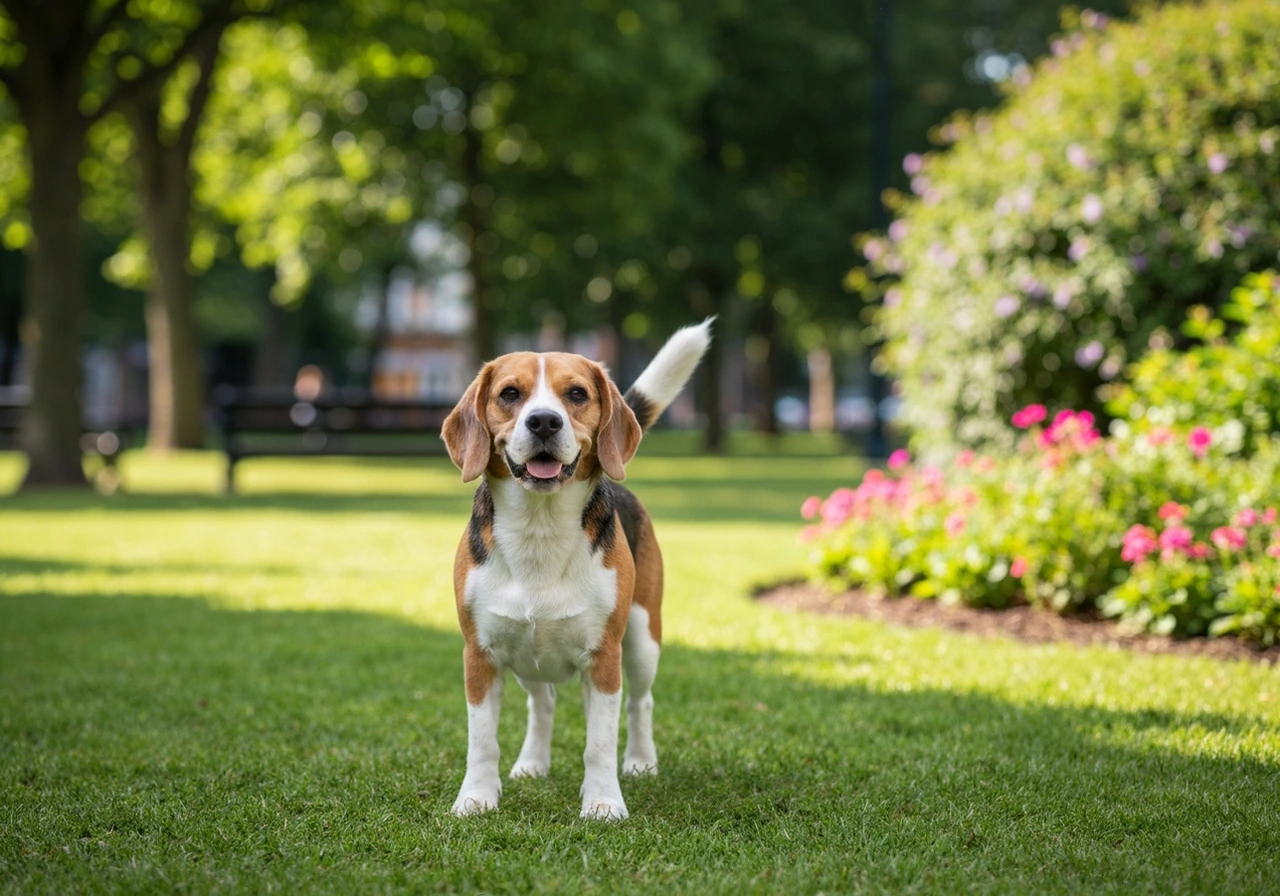
Greta didn't want to eat from a raised bowl at first. She preferred her old bowl on the ground, even though it was harder for her. I let her choose. Eventually, she moved to the raised bowl on her own, when she was ready. The transition was hers, not mine.
Beau hated his first harness. It rubbed wrong, constrained wrong, felt wrong. I got a different one. And a different one after that. Until we found one he'd accept. His comfort and dignity were worth the extra expense and effort.
When dogs can still choose - which bed, which spot in the sun, which treat, which path on a short walk - let them. These small exercises of preference are how they remain themselves. Every choice they make is an assertion of identity that aging tries to erode.
End-of-Life Dignity
There comes a point where dignity becomes the primary concern. When suffering cannot be managed, when discomfort outweighs joy, when the body has become a prison more than a home - dignity means choosing death over prolonged indignity.
This is perhaps the most important thing I've learned: there is more dignity in a gentle death than in an agonizing life. Letting go, when the time is right, is the final act of respect we can offer.
With each of my senior dogs, I've tried to read the line. Not just the line of suffering - that's important, but not the only factor. Also the line of dignity. Would this dog, in their prime, choose to live this way? Would they want to be carried everywhere, to be unable to control their bladder, to be confused about where they are?
I can't know for certain what they would choose. But I can observe what seems like indignity to them. The shame after accidents. The frustration of failed attempts to rise. The confusion that leaves them lost in their own home. When these moments become more common than moments of dignity, the time is near.
Choosing euthanasia is not abandoning dignity. It's the final protection of it. It says: I love you enough to spare you the loss of everything you were.
Greta's Last Dignity
The day before Greta died, she had two accidents she couldn't help. She looked at me both times with those eyes that had so much history - shame, apology, exhaustion. Her body had become something she couldn't trust.
But that evening, I carried her to the porch one last time. I held her while she watched the sunset. She couldn't walk there, but she could still see it. She could still smell the air. She could still be a dog who loved evenings on the porch.
That was her last dignity: not being reduced to her failures, but being lifted to her joys. Not being defined by what didn't work, but being connected to what still mattered.
The next morning, she died in my arms. I believe she died with her dignity intact. I'd spent twenty-seven months trying to preserve it, and those final moments, I think, proved it possible.
For Those Who Care
If you're caring for an aging dog right now - wiping up accidents, lifting them to their feet, watching them struggle with things that used to be easy - I want you to know: what you're doing matters.
Every moment of patience is an act of dignity preservation. Every gentle word is a reminder that they're still valued. Every choice you protect, every shame you deflect, every way you help without hovering - these are the tools of dignified aging. If you're struggling with this journey, our reader stories show you're not alone.
It's hard work. It's often unglamorous work. It doesn't come with the dopamine hits of training a puppy or the adventures of middle age. But it's perhaps the most loving work there is.
You are standing between your dog and indignity. You are saying, with every act of care: your body may be failing, but your worth is unchanged. You are still my dog. You are still good. You are still worthy of everything I have to give.
That's what dignity means in old age. Not pretending the decline isn't happening. Not preventing what can't be prevented. Just... holding their worth steady, even as other things fall away.
They deserve it. And you deserve to know that what you're doing, however quiet and unseen, is one of the most profound expressions of love there is.