
This is the page I didn't want to write. The one that required me to sit with my own history and pull apart decisions I still sometimes question at 3 AM. But I write it because I remember the desperate searching - the typing "how do I know when it's time" into search engines at midnight, looking for someone, anyone, who could tell me what to do.
No one can tell you what to do. But I can tell you what I've learned across eight Collies and forty years. I can share the questions that helped me. I can sit with you in this impossible place and say: I've been here too.
The Question Everyone Asks
How do I know when it's time?
The honest answer is: you might not know with certainty. I've never made this decision and felt completely sure I was right. There's always a voice that wonders if you waited too long, or didn't wait long enough. That doubt is the price of love. You pay it because the alternative - not loving them this deeply - isn't something you'd trade.
But there are things to watch for. Not rules, exactly. More like signposts on a road you never wanted to travel.
The Things They Love
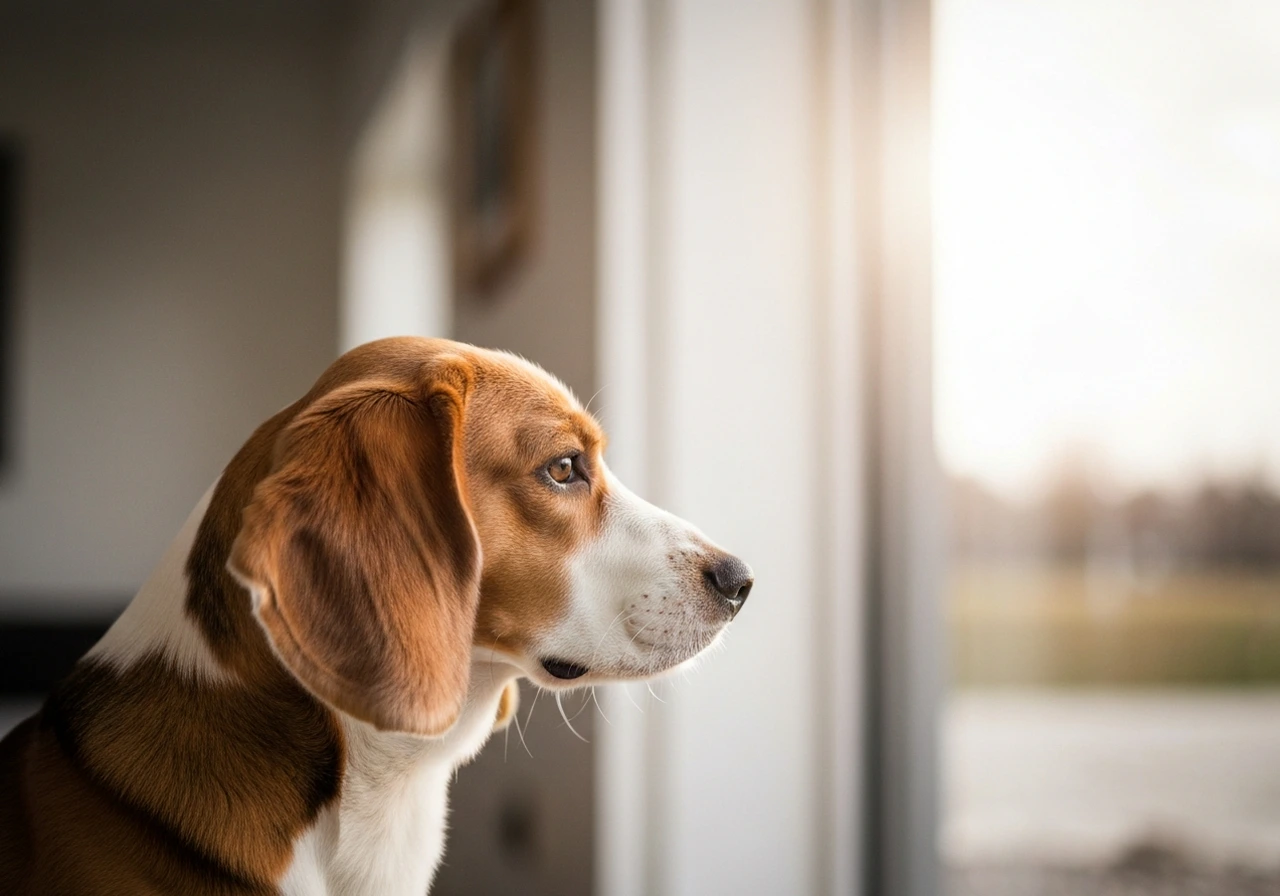
Every dog has their list. The things that make their tail wag, their ears perk up, their eyes brighten. For Shadow, it was watching the harbor. For Heather, my first Collie, it was chasing leaves in autumn. For Duncan, it was breakfast - that dog loved food more than any creature I've ever known.
When they stop caring about the things they love, pay attention.
Not just one day - dogs have off days like we do. But when the harbor no longer holds Shadow's attention. When Heather watches leaves fall without interest. When Duncan doesn't get up for breakfast. That's information. That's your dog telling you something important.
I kept a list for each of my dogs in their final months. Five things they loved, written on an index card stuck to the refrigerator. When three of the five were gone consistently for more than a few days, I knew we were approaching the end.
Shadow's List
1. Watching the harbor
2. Ear scratches behind her left ear
3. Her evening cookie
4. Greeting me when I came home
5. Sleeping in the sun patch by the window
In her last week, only the ear scratches remained. She'd lean into my hand still, eyes half-closed. But the harbor held no interest. The cookie went untouched. She didn't rise when I came home. The sun patch sat empty. Her body was still here, but the things that made her Shadow were fading.
Pain and Comfort
Dogs are stoic. Evolution made them that way - showing weakness in the wild is dangerous. So by the time they show pain obviously, they're often in a lot of it. This is why providing comfort care becomes so important.
Watch for the subtle signs. Reluctance to lie down or get up. Panting when they're not hot. Restlessness, especially at night. Changes in posture - the hunched back, the tucked tail, the careful way they place their feet. These are whispers of discomfort before the shouts.
Talk to your vet about pain management. There are options now that didn't exist twenty years ago - medications, therapies, protocols that can buy time and comfort both. Ask what's possible. Ask what it would mean for your dog's quality of life.
But also ask: are we managing pain, or postponing the inevitable? There's no judgment in that question, just honesty. Sometimes managing pain means giving them more good months. Sometimes it means extending something that no longer serves them.
The Good Days and Bad Days Scale
This is the framework that's helped me most. Start keeping track - actually write it down, because memory is unreliable when you're grieving in advance - of the good days versus bad days.
A good day is one where they seem like themselves. Interested in their surroundings. Comfortable. Present. A bad day is one where they're clearly struggling - not eating, hiding, vomiting, unable to get comfortable, withdrawn.
When I started losing track of the last good day, I knew we were close. When the bad days started outnumbering the good days consistently, I started making calls.
Your dog will have their own version of this. What matters isn't the specific metric but the trend. Are they moving toward more good days or fewer? Is the trajectory up or down? The trajectory tells the story.
The Gift of Timing
There's a phrase I heard years ago from a veterinarian who specialized in end-of-life care: "Better a week too early than a day too late."
I resisted this at first. How could early ever be better? How could I take time from my dog that we might have had?
But I've come to understand it differently now. The day too late is the day they suffer unnecessarily. The day they look at you with eyes that are begging for release while you hold on because you're not ready. The day their final memory is pain instead of peace.
A week too early means they're still somewhat themselves when they go. It means their last day includes something they loved, even if just a quiet moment in the sun. It means they leave while there's still light in their eyes instead of waiting until the light has already gone.
I think about this as a final gift. We can't give them immortality. We can't fix everything that breaks. But we can spare them the worst of the end. We can choose for their last day to be a good day.
Duncan's Last Good Day
Duncan's final morning, I made him scrambled eggs. Real ones, cooked just for him, with a little cheese because he was a cheese fanatic and what did cholesterol matter now? He ate them slowly - his appetite was mostly gone by then - but he ate them. Every bite.
Then we sat on the porch together in the early autumn sun. He put his head on my lap, which he hadn't done in weeks because lying down hurt. But that morning, he managed it. We stayed there for two hours, him sleeping, me watching the leaves he used to chase.
The vet came at noon. Duncan went peacefully, his belly full of eggs, his head still on my lap. If I'd waited even one more day, he wouldn't have been able to eat those eggs. He wouldn't have been able to rest like that. His last good day would have already passed.
What Happens During
I won't describe the medical details - your vet can explain those, and every situation is different. But I'll share what I've experienced emotionally, because that's what I couldn't find when I was searching.
It's peaceful. More peaceful than you expect. All the anxious anticipation, all the dread - it gives way to something quiet. A sacred space between you and your dog in their final moments.
You can choose to stay or not stay. There's no wrong answer. I've stayed for all of mine, but I know people who couldn't, and their dogs still died loved. If you stay, know that they might move or vocalize - this is normal and doesn't mean pain. Their body is releasing. They're already gone.
The silence after is profound. You'll expect to be sad. You might be sad. But many people describe the first emotion as relief - relief that the suffering is over, relief that you did this hard thing, relief that they went peacefully. The grief comes later, sometimes immediately, sometimes days or weeks after.
Making the Decision
Some people want their vet to tell them when. I understand this. The weight of being the one who decides is almost unbearable. But here's what I've learned: your vet can tell you the medical facts. They can tell you the prognosis, the options, the likelihood of improvement. They cannot tell you when your dog's quality of life has dropped below the threshold only you can see.
Because you're the one who knows your dog. You're the one who knows what their good days look like. You're the one who can read their eyes, their posture, the particular way they sigh. Your vet has medical expertise. You have intimate knowledge. Both matter. You need both.
When I made the call for Shadow, I told my vet: "I think it's time." She asked me questions - eating habits, mobility, engagement. Then she said, "I agree. I think you're right." That confirmation helped. But she couldn't have made the initial assessment. Only I could see what Shadow had become versus what she'd been.
The Practical Details
Some practical things no one told me that I wish someone had:
At home is possible. Many vets will come to your home for euthanasia. This costs more but allows your dog to pass in familiar surroundings without the stress of the car and clinic. It was the right choice for Shadow. It wasn't possible for Duncan - the vet I trusted couldn't make house calls. Both deaths were peaceful.
You can take time. After they're gone, you don't have to rush. Stay with them. Hold them. Say what you need to say. The vet will give you space. There's no timer running.
Decide about remains beforehand. This isn't something you want to think about in the moment. Options typically include communal cremation, private cremation with ashes returned, or burial if your location allows. Know what you want so you're not making decisions while newly devastated.
Have support planned. Someone to drive you if you're going to a clinic. Someone to call after. Someone who will sit with you and not try to fix it. Don't do this entirely alone.
After
The after is the subject of another page on this site. But I'll say this here: what you're doing is hard. What you're considering is an act of love so profound that language fails it. You are taking on suffering so they don't have to. You are carrying the weight of this decision so they can be free of it.
That's not playing God. That's being the guardian they always trusted you to be, right up until the end.
Resources for Quality of Life Assessment
- The HHHHHMM Scale (Hurt, Hunger, Hydration, Hygiene, Happiness, Mobility, More Good Days Than Bad) - developed by Dr. Alice Villalobos
- Your vet - ask them directly about quality of life metrics for your dog's specific condition
- Veterinary hospice services - available in many areas, specializing in end-of-life care
- The herding breed health resources - for breed-specific aging information
If you're reading this in the middle of the night, searching for answers, I see you. I've been where you are. The love that's keeping you awake, that's making you read every word looking for guidance - that love is exactly why your dog has been lucky to be yours. Trust that love now. It knows more than you think.