
When Greta came home with me, she was eleven years old and arthritic. My house wasn't ready for her. It was designed for a different life - hardwood floors throughout, furniture at human heights, stairs between every room that mattered. A home for able bodies, not aging ones.
Over the next twenty-seven months, I transformed that house into a sanctuary. By the time she died, every room had been modified to accommodate her needs. Rugs on slippery floors. Ramps to the couch and bed. Nightlights in every hallway. Her water bowl at the perfect height. Her beds positioned near windows where she could watch the world even when she couldn't walk through it.
I thought I was making changes for Greta. I was. But I was also learning something about what home could mean - not just a place to live, but a place designed around love. A sanctuary built for one creature's comfort. A space that says, with every modification: you matter here. Your needs shape this place.
The Physical Sanctuary
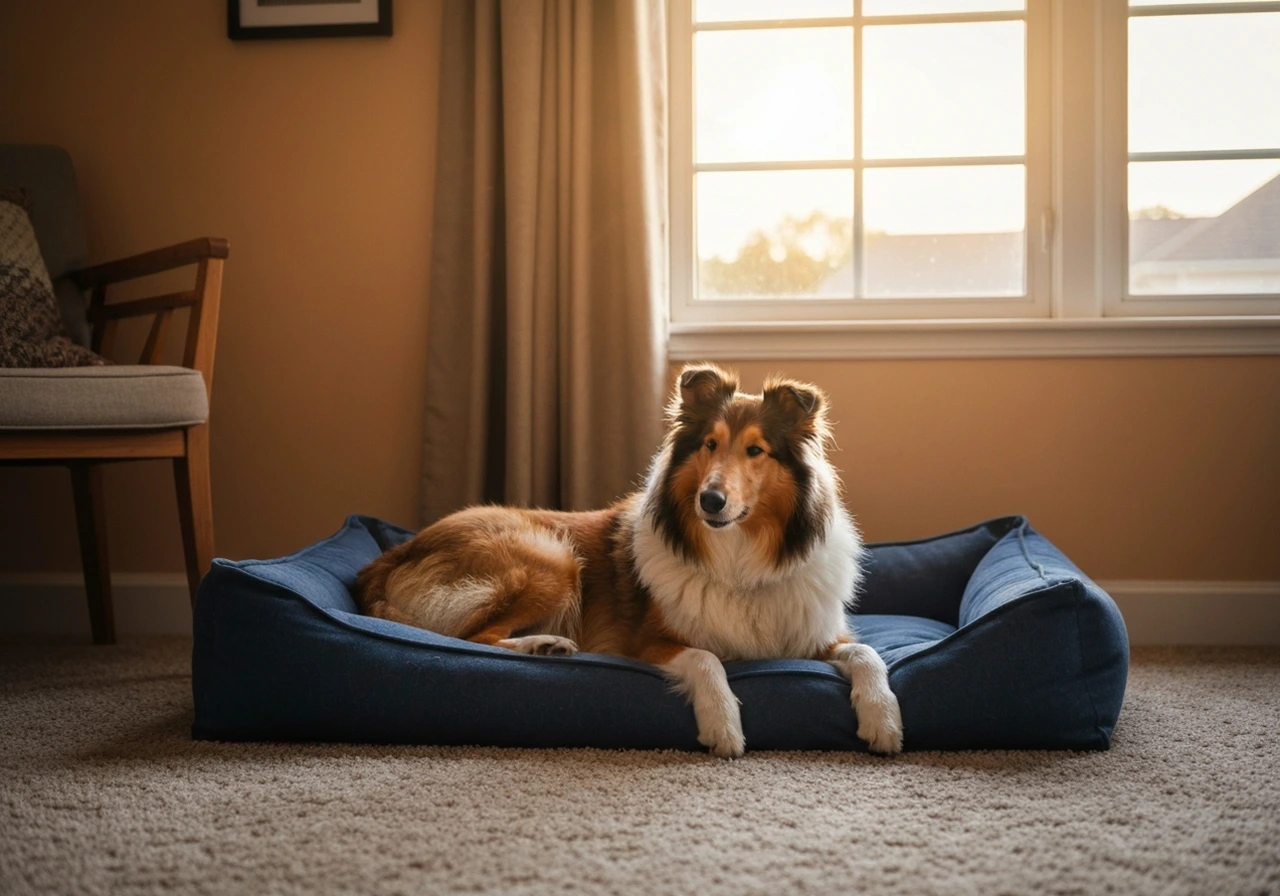
Let me start with the practical, the things you can do with your hands and your wallet:
Traction everywhere. This was the first and most important change. Greta's legs would splay on hardwood floors. She'd struggle to rise, sliding like a newborn deer, dignity lost with each failed attempt. I covered every path she took with area rugs, runners, yoga mats - anything that gave her something to grip. The house looked eccentric. She could walk without fear.
Beds that matter. A senior dog's bed isn't just a sleeping place - it's where they spend most of their life. I invested in orthopedic memory foam, thick enough to cushion arthritic joints, supportive enough to help them rise. I placed beds in every room: living room, bedroom, kitchen, office. Wherever I was, there was a comfortable place for her to be.
Ramps and steps. Greta loved being on the couch with me. She loved sleeping at the foot of my bed. But jumping became impossible, then dangerous, then unthinkable. I built a ramp for the couch - a gentle slope covered in carpet. I bought pet stairs for the bed. These weren't admissions of defeat. They were invitations to keep participating in our life together.
Water and food accessible. Raised bowls so she didn't have to bend her stiff neck. Water stations in multiple rooms so she never had to walk far when thirsty. Meals in whatever room she was already in - why make her move when I could bring it to her?
Light where it's needed. Senior dogs often develop vision problems. Nightlights in every hallway, every room transition. A lamp that stayed on low in the living room so she could see me if she woke confused. The darkness that used to be neutral became something I managed for her sake.
Temperature control. Old dogs feel cold more intensely. A heated bed for winter nights. A fan positioned low for summer relief. Awareness of where drafts came through, where the sun pooled warm on the floor, where she'd be most comfortable as the weather changed.
Essential Modifications
- Area rugs or runners on all smooth floors
- Orthopedic beds (4+ inches thick) in main living areas
- Ramps or steps to favorite furniture spots
- Raised food and water bowls
- Nightlights in hallways and dark rooms
- Baby gates to block dangerous stairs if needed
- Potty pads for accidents (no shame, just practicality)
- Heated or cooling beds for temperature comfort
The Emotional Sanctuary
A sanctuary isn't just physical. The emotional environment matters as much as the rugs and ramps. Senior dogs are sensitive - perhaps more sensitive than when they were young. They pick up on stress, on tension, on the particular worry that comes from loving something fragile.
Creating an emotional sanctuary means:
Calm routines. Predictability comforts aging minds. I kept Greta's schedule consistent: morning feeding at the same time, afternoon rest in the same spot, evening quiet in the same rhythm. When she knew what was coming, she could relax into it. This consistency is part of preserving the dignity of old age.
Patience as practice. Everything takes longer with a senior dog. Getting up. Going outside. Walking to the door. Eating dinner. I learned to slow down, to let her set the pace, to never rush her through the motions of her reduced life. Patience isn't just kindness - it's what sanctuary requires.
Presence without demand. I stopped expecting Greta to perform. No more training sessions to keep her mind sharp. No more guilt about skipped walks. Just presence. Just companionship. Just being together without agenda.
Managing my own anxiety. This was harder than any physical modification. When you know your dog is dying, anxiety becomes constant. But that anxiety seeps into the environment, into your energy, into what they sense from you. I learned to process my fears away from Greta - to cry in another room, to worry out of her presence. What I showed her was calm, even when I didn't feel it.
Joy in small things. A treat. A sunny spot. A gentle ear scratch. In the sanctuary of old age, big adventures are replaced by small pleasures. I learned to celebrate these fully, to make much of little, to let Greta see that small things still brought me joy because they still brought her joy.
The Sanctuary Moment
There was an evening, maybe three months before Greta died, when I suddenly saw what I'd created. I was sitting on the couch with her - she'd walked up her ramp and settled against me. The lights were low but not dark. Her heated bed waited for later. The house was quiet, calm, shaped entirely around her comfort.
I thought: this is what love looks like when it becomes architecture. When it becomes design. When it shapes the physical space you inhabit.
I'd spent twenty-seven months modifying my home for an eleven-year-old shelter dog. And in doing so, I'd created something I'd never had before: a space designed entirely around care. A sanctuary built for one creature's comfort. A home that was truly home.
The Sounds of Sanctuary
Something I didn't expect: sound matters. The auditory environment of your home affects your senior dog's peace.
Sudden loud noises - a dropped pan, a slammed door, unexpected shouting - startle aging dogs more than young ones. Their hearing may be declining, but what they hear still registers, sometimes more jarringly because it arrives without context.
I became conscious of the sounds in my sanctuary. I closed doors gently. I turned down the TV. I spoke softly around Greta, especially when she was sleeping. Not in an exaggerated whisper, but in the quiet register that says: this is a peaceful place.
Music helped. Not loud, not complex. Soft instrumental, classical, the particular kind of ambient sound that seems to calm dogs. I played it during her final months, a sonic blanket over the house.
The sounds of my voice mattered most. Greta couldn't understand my words, but she understood my tone. Cheerful greeting when I came home. Soothing murmurs when she seemed anxious. The repeated reassurance: "Good girl. You're okay. I'm here." These became the soundtrack of our sanctuary.
Making Space for the End
Part of creating sanctuary is preparing for its final purpose. The sanctuary isn't just for living - it's for dying, too. It's where they'll take their last breath, if you're fortunate enough to manage that.
I wanted Greta to die at home. I arranged for a vet who did house calls for euthanasia. I chose the spot - by the window where she liked to lie, on her favorite bed, in the room where we'd spent the most time together. I didn't tell her what I was planning, but I prepared the space. Candles I would light. A blanket I would use. The physical details of her departure, considered in advance so I wouldn't have to decide anything in the moment.
This sounds morbid, but it wasn't. It was an extension of the sanctuary logic: if every other moment of her life here was shaped around her comfort, why not the final moment too? If I could control where she rested and how she walked and what she ate, why not also control how she left?
When the day came, everything was ready. She died in the spot I'd prepared, on the bed I'd chosen, with the light exactly as I'd imagined it. The sanctuary held her through every stage, including the last.
The Sanctuary After
When Greta was gone, the sanctuary became something else. It became a museum of absence. Every modification I'd made for her comfort became a reminder that she wasn't there to use it.
The ramp to the couch. The water bowl at the height of her old head. The beds in every room. For weeks, I couldn't change any of it. The sanctuary was all I had left of her.
Gradually, I reclaimed the space. I removed the ramps - I didn't need them. I consolidated the beds - one in the living room now, for the next old dog, for Beau when he came. I kept the rugs, though. I kept the nightlights. The sanctuary had changed me. I didn't want to live in a house that wasn't shaped by care.
When Beau arrived, nine years old with bad hips, the sanctuary was ready. Not the same sanctuary - he needed different things in different places - but the structure was there. The willingness was there. The understanding that home should be built around the needs of those we love.
What the Sanctuary Taught Me
Building a sanctuary for Greta taught me something I didn't expect: that our environments are choices. That the way we design our spaces reflects our values. That love can be expressed through rugs and ramps and strategically placed water bowls.
I live differently now. Not just with dogs - with everything. I ask: what does this space say about what matters here? Who is this room designed to serve? What would comfort look like if it were built in?
Greta needed a sanctuary for twenty-seven months. She gave me a philosophy that will last my whole life.
Creating Your Sanctuary
If you have a senior dog - or will have one someday - here's what I want you to know: you can do this. You can transform your home into a haven. It doesn't require complete renovation. It requires attention, modification, and the willingness to put their comfort first.
Start with the paths they walk. Where do they slip? Lay down traction. Where do they pause, hesitating? Install a ramp or remove the obstacle. Where do they struggle to rise? Get a better bed.
Move outward from there. Water access. Lighting. Temperature. Sound. The emotional environment you create with your presence and your patience.
You're not just making your dog more comfortable. You're creating something sacred: a space designed entirely around love. A home that says, in every modification, you matter here.
That's what a sanctuary is. Not a fancy word for a dog-friendly house. A statement made physical. A love letter written in rugs and ramps and carefully placed beds.
Your old one deserves it. And you deserve the peace of knowing you've given them everything you could. When you create this space with intention, you're also preparing your heart for what's to come.
Build the sanctuary. Make the changes. Let your home become what it was always meant to be: a haven for those you love, designed around their needs, shaped by care until the very end. Consider writing them a love letter while they're still here to inspire it.