
There was a time when Greta and I walked three miles every morning. She was younger then - well, we both were - and she'd tug the leash, eager to explore every scent, every corner, every possibility. Our walks were exercise, adventure, purpose. They were the structure around which our days were built.
In her final year, our walks became something different. Half a block, sometimes less. Not because I was rushed, but because that's all she could manage. She'd step outside, sniff the familiar territory, take her time doing her business, and then look at me with eyes that said "okay, that's enough." We'd go back inside, and she'd sleep for hours.
At first, I grieved these abbreviated walks. The loss of our morning ritual. The shrinking of her world. The reminder that she was leaving me in slow motion. This is the kind of anticipatory grief that comes with preparing your heart for loss.
But somewhere in those slow days, something shifted. I stopped mourning what we couldn't do and started paying attention to what we still had. And what we had, it turned out, was something I'd been too busy to notice when we were moving faster.
The Curriculum of Stillness
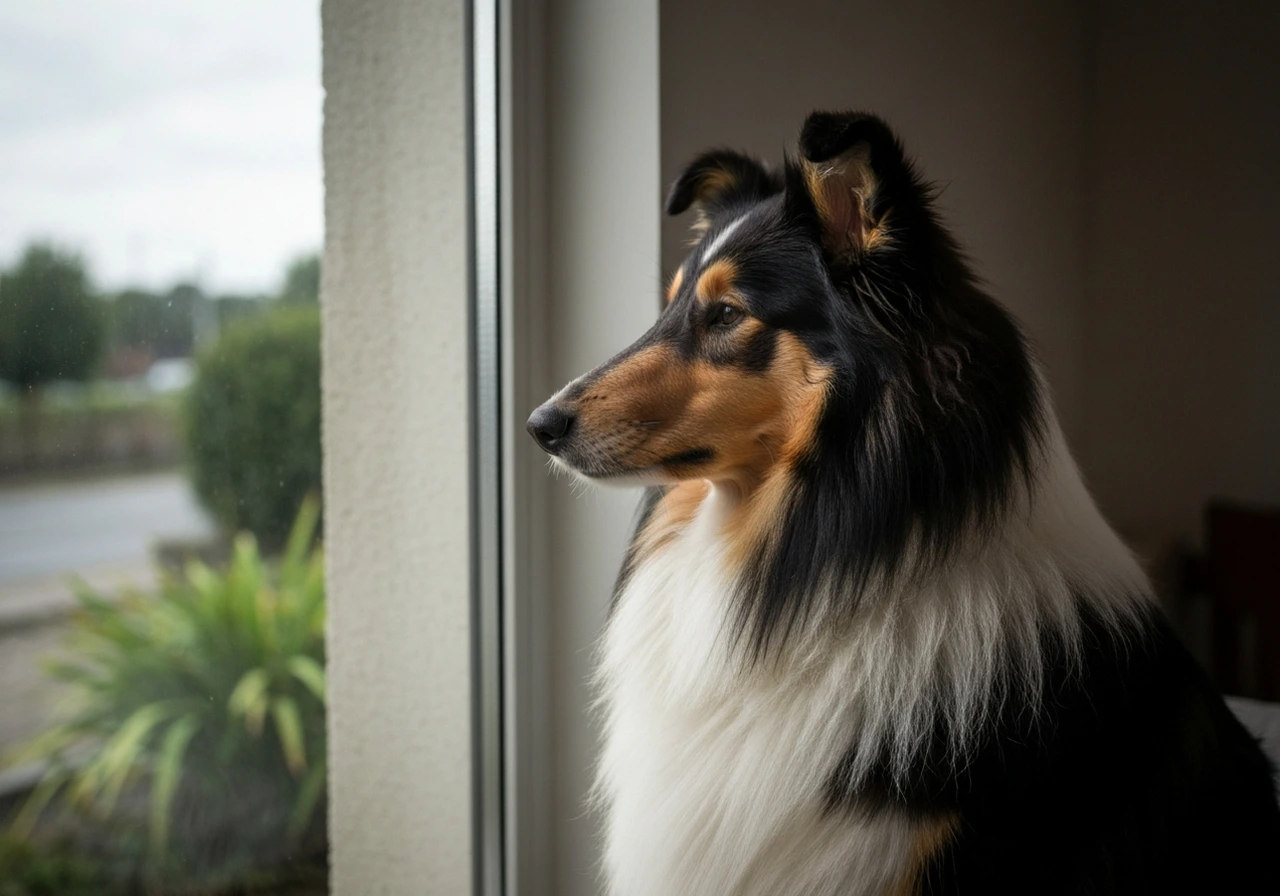
Senior dogs teach a curriculum that our culture rarely offers: how to be present without being productive. How to rest without guilt. How to find contentment in simply existing.
In the years when Greta was active, our time together was often parallel to other activities. I'd walk her while planning my day. I'd sit beside her while reading emails. I'd pet her absently while thinking about something else. She had my presence but not my attention.
When she slowed down, the parallel activities dropped away. What was left was just... us. Sitting together on the porch, watching nothing in particular. Lying on the floor beside her bed, my hand on her side, feeling her breathe. Being present in a way I hadn't been since childhood, maybe ever.
It was uncomfortable at first. I'd spent decades training myself to multitask, to optimize, to never waste time. But Greta's slow days didn't allow for optimization. They demanded something simpler and harder: just being there.
The Afternoon I Understood
There was an afternoon about four months before Greta died. I was sitting on the porch with her, frustrated because I had work to do and she wanted to be outside and I felt trapped by her need for company. I was watching the clock, calculating how much longer before I could justify going back to my laptop.
And then she put her head on my foot. Just rested it there, warm and heavy and trusting. Her eyes closed. Her breathing slowed. She was utterly content to just be with me, asking nothing more than my presence.
Something broke open in me. Or maybe something broke free. I stopped watching the clock. I watched her instead. I felt her weight on my foot, the warmth of the sun, the particular quality of the afternoon light. For maybe the first time in my adult life, I had nowhere to be and nothing to do but be exactly where I was.
Greta gave me that. Her slowness gave me that. I wouldn't trade it for a hundred three-mile walks.
The Reordering of Days
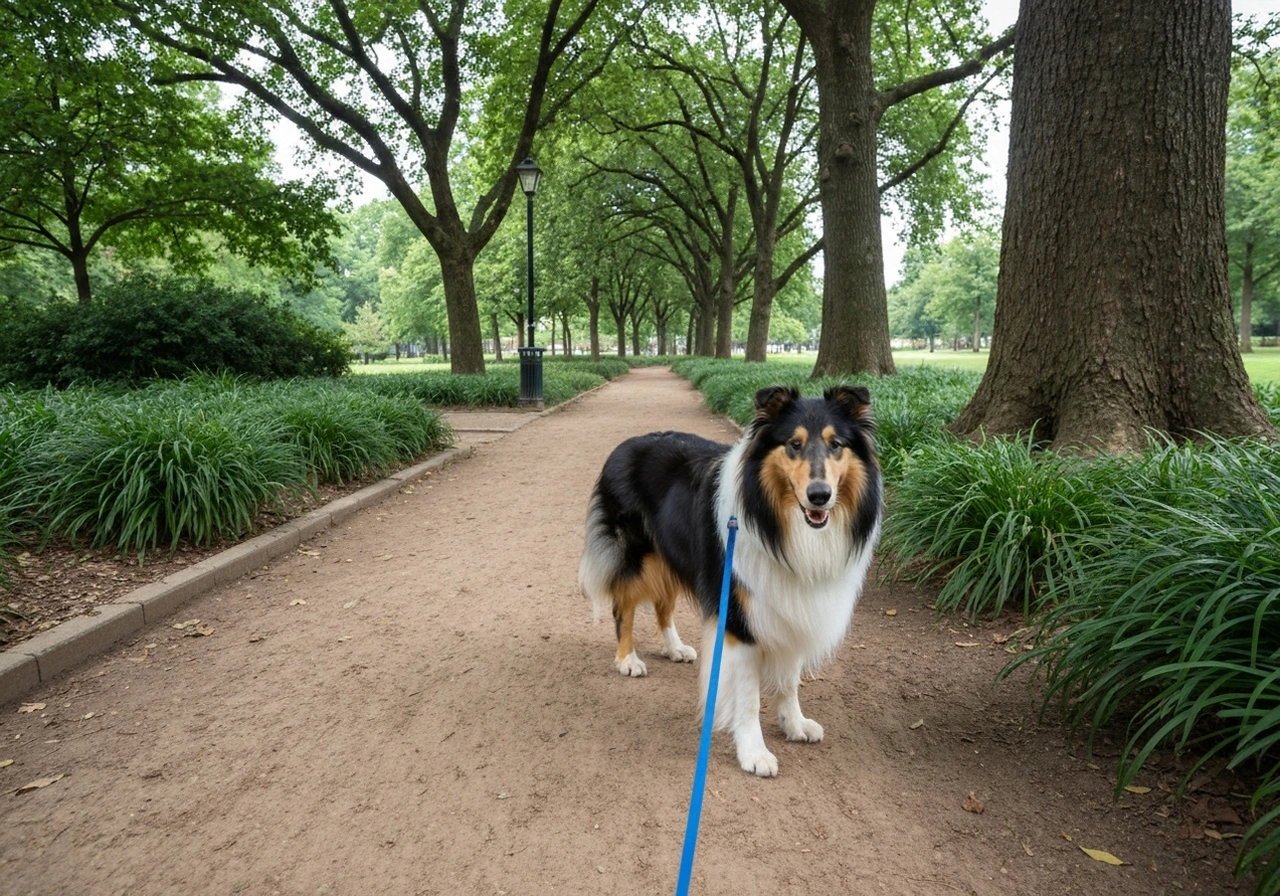
When you live with a senior dog, your schedule stops belonging entirely to you. You plan around their needs. Medications at certain times. Shorter outings so they're not alone too long. More time budgeted for everything because they can't be rushed.
This is often described as burden - the limitations of caring for an aging animal. But I've come to see it differently. The reordering that senior dogs require is an invitation to question whether your previous ordering made sense.
Before Greta slowed down, I was rarely home. Work, social commitments, errands that could have waited. I filled my days to overflowing because empty time felt wasteful. Senior Greta forced me to be home more. To stay in one place. To stop running.
I discovered I'd been running from something. The stillness I avoided wasn't wasteful - it was necessary. I'd just been too afraid of it to let myself stop. Greta's needs gave me permission to stop. Her requirements became my excuse to do what I'd needed all along.
This isn't true for everyone, I know. Some people love stillness naturally. But for those of us who don't, who fill our days to avoid feeling them, a senior dog can be a strange kind of gift. A living, breathing reason to slow down.
Time Changes Shape
When you know your dog's time is limited - really know it, not just intellectually but in your bones - time itself changes shape. It becomes denser. More present. Less abstract.
I remember looking at Greta in her final months and feeling time differently than I'd ever felt it. Each moment was heavier because there were fewer of them left. Each ordinary day was precious because there would be so few more. The future stopped mattering as much as the right now.
This awareness was painful. But it was also clarifying. The things that seemed urgent before her illness - the deadlines, the obligations, the ceaseless doing - lost their urgency in the light of her fading. What mattered was the moment I was in. What mattered was the grey muzzle beside me, the time we had left, the presence I could give.
Beau taught me the same lesson, four years later. And each senior dog since has reinforced it. Time isn't the clock on the wall. Time is the breath of the creature beside you. Time is now, and now, and now. And then it's gone.
What the Slow Days Offered
Let me tell you what I received in those slow days, because the gifts were concrete even if they're hard to describe:
Deeper connection. When you can't do things with someone, you have to just be with them. The relationship shifts from activity-based to presence-based. You learn them differently - not what they do, but who they are. With Greta, those slow days taught me the rhythm of her breathing, the repertoire of her sighs, the particular way she positioned herself when she was content. I knew her better in her final year than I had in all the active ones.
Permission to rest. I couldn't rush Greta, so I stopped rushing myself. When she napped, I often napped too. When she wanted to sit, we sat. The frantic pace of my normal life dropped away, replaced by something gentler. My nervous system, always activated, finally had space to calm.
Practice for grief. The slow days were a kind of preparation. Watching her fade, having less to do together, spending more time just existing in each other's company - this was grief in slow motion. When she finally died, I was devastated, but I was also... practiced. I'd been living in loss already. The final loss was the culmination, not the beginning. Processing that grief became easier because I'd already started.
Reassessment of values. When you're forced to pare life down to essentials, you see which essentials actually matter. The things I thought I couldn't live without - the busy schedule, the constant activity - turned out to be avoidable. The things I thought were optional - stillness, presence, simple companionship - turned out to be necessary.
The Last Walk
Greta's last walk was eight feet. From her bed to the door. She stepped outside, lifted her nose to the morning air, stood there for maybe twenty seconds, then looked at me with those eyes that said "okay, that's enough."
I carried her back to her bed. She died two days later.
Those eight feet were as meaningful as any three-mile walk we'd ever taken. Maybe more meaningful. They were what she could give. They were what she wanted. And I was there for every step.
The Gift You're Being Offered
If you're reading this with a slowing senior beside you, I want you to know: you're being offered something. It may feel like only loss - the loss of what you used to have, the loss of what's coming. But inside that loss is a gift that's hard to receive any other way.
The gift is now. The gift is stillness. The gift is presence without performance. The gift is learning to just be with another creature, asking nothing except to exist together.
You can resist it. You can mourn the active days so thoroughly that you miss the slow ones. You can fill the stillness with worry, with preparation for grief, with the busyness of medical care. Many people do. I did, for a while.
But if you can receive it - if you can let the slow days be what they are, not just waiting for the end but living in the meantime - you'll find something you didn't expect. Peace. Connection. A kind of love that doesn't need action to express itself.
Your dog is teaching you something. They don't know they're teaching; they're just being what they are, a creature whose body has slowed while their heart remains full. But the lesson is there, if you're willing to learn it.
After the Slow Days
When Greta died, the silence was terrible. But inside the silence was also the echo of what I'd learned. The stillness that had seemed forced became... available. I could access it without her. She'd taught me how.
I still struggle with it - I'm still a person who tends toward too much motion, too much doing. But now I know there's another way. Now I know that sitting quietly isn't waste. Now I know that presence matters more than productivity. Now I know that time is precious not because it should be filled but because it should be felt.
These are lessons I couldn't have learned from a book. They required a grey muzzle beside me, slowing down, requiring my attention, teaching me without trying that the slow days aren't loss. They're gift. They're perhaps the greatest gift of all.
What I'd Tell My Younger Self
If I could go back to the beginning of Greta's slow decline, I'd say: stop grieving what you're losing and start receiving what you're being given. Yes, she's slowing down. Yes, the walks are shorter. Yes, the end is visible on the horizon.
But look at what you have right now. Look at this creature who loves you, who is teaching you without words, who is offering you permission to rest in a life that rarely allows it. This isn't waiting for death. This is a different kind of living. Learn it. Receive it. Let it change you.
The fast days are over. The slow days are here. And the slow days, it turns out, are where the deepest lessons live.
May you find the gift in your slow days. May your grey muzzle teach you what mine taught me. May you look back on this time not as burden but as blessing, not as waiting but as presence, not as ending but as the deepest kind of being together. And may you find comfort in preserving these memories as you live them.
The slow days are a gift. I promise. It just takes time to unwrap them.